
Mayer Brings New Vision for IBD-Associated Spondyloarthritis to the CDI
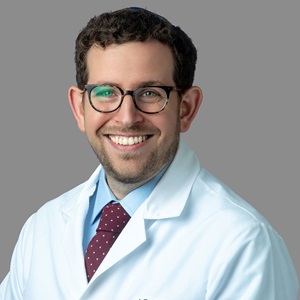 When Adam Mayer, M.D., M.S.C.E joined the Center for Discovery and Innovation (CDI) on Aug. 1, he brought a rare combination of skills: he treats both children and adults with arthritis, and he is also trained to study large groups of patients to understand disease patterns and improve care.
“I’ve had a long, winding road to get here,” he says. “But every step brought me to this exact area—IBD-associated arthritis—where patients really need better answers.”
“Adam Mayer is a promising physician-scientist, and this is an important niche that has such potential to improve young lives,” said David Perlin, Ph.D., chief scientific officer and executive vice president of the CDI.
An Overlooked Condition
Dr. Mayer spent 12 years at the University of Pennsylvania and Children’s Hospital of Philadelphia, completing training in internal medicine, pediatrics, adult rheumatology, and pediatric rheumatology. He also earned a Master’s in Clinical Epidemiology, which teaches doctors how to use data and research to study health problems.
That combination allows him to care for a unique patient population—and to help build something new in New Jersey.
Throughout his training, Dr. Mayer has cared for children, teens, and adults with a type of inflammatory arthritis linked to inflammatory bowel disease (IBD). These patients often struggle with joint pain, swelling, and stiffness that can affect their spine and major joints. Many are not diagnosed for years.
“It’s an area of medicine that doesn’t get enough attention,” he explains. “And because it’s overlooked, many people develop damage that we can’t undo.”
He remembers a teenage athlete who came to him in severe pain and unable to walk without crutches. “She was at risk of needing major surgery at a very young age,” he says. “We diagnosed her quickly and started the right treatment. Today she’s in college, running again, and doing incredibly well.”
Stories like this motivate his work—especially because early diagnosis and treatment can drastically change a young person’s future.
A New Center, New Promise
At CDI and Hackensack University Medical Center (HUMC), Dr. Mayer is building a new IBD Spondyloarthritis Center—a program where patients can receive coordinated care from rheumatologists, gastroenterologists, dermatologists, and pediatric specialists.
Because he treats both children and adults, Dr. Mayer is uniquely positioned to create a hub to care for patients throughout their lives, including during the tricky transition from pediatric to adult care.
“This center will help us diagnose patients earlier, treat them better, and understand their disease in a much deeper way,” he says.
He and Alyssa Parian, M.D., director of the IBD Program at HUMC, are creating a group—or “cohort”—of patients who agree to share health information and samples for research. This will help scientists study the disease more closely and create new ways to diagnose and treat it.
Their work recently received support from a grant from the Spondylitis Association of America, helping the team begin building the program.
One major area Dr. Mayer is studying is whether certain common pain relievers—called NSAIDs, such as ibuprofen—can be used safely in patients who have both IBD and arthritis. Current medical advice is unclear, and guidelines from different specialties often conflict.
“Rheumatologists want to use NSAIDs because they help arthritis,” he explains. “But IBD guidelines often say not to, because of concern they might worsen bowel symptoms.”
Dr. Mayer’s research suggests that the risks may not be the same for every patient. Some people with IBD may be able to use these medications safely, which could give them an affordable and effective treatment option. His study was recently submitted for publication.
Another major goal of Dr. Mayer’s research is using artificial intelligence (AI) to detect signs of arthritis earlier—sometimes years before patients feel severe symptoms.
He recalls the story of a 32-year-old man whose spine had fused due to long-standing inflammation. “When I looked back at scans taken 10 years earlier for a stomach issue, the early signs of arthritis were already there,” he says. “But no one was looking for them.”
Using AI to read medical images could help flag these early signs, leading to treatment long before serious damage occurs.
Even early in his career, Dr. Mayer already holds several national leadership roles. He helps guide national research groups, contributes to treatment guidelines used by rheumatologists across the United States, and collaborates with experts around the world.
“We’re helping to shape how doctors approach this disease on a national level,” he says. “And CDI is a big reason why we can do that.”
The Lighter Side
Outside of medicine, Dr. Mayer is a father of two young children. He and his wife—an attorney in Philadelphia—balance busy careers with raising a family.
The funny bone is another specialty for Mayer. He is also a stand-up comedian, having performed at different locations and is known for starting hospital rounds with a daily “dad joke.” He has run two marathons, traveled to 41 countries, and speaks multiple languages. He has also spent time providing medical care in Africa, South America, Europe, and the Middle East.
“I’ve always been drawn to people and their stories,” he says. “That’s just as important in medicine as anything you read in a textbook.”
For Dr. Mayer, CDI is the right place to expand his work and build a center that serves patients who have long been overlooked.
“What excites me most is the chance to take what I see in the clinic and turn it into real solutions for patients,” he says. “If we can diagnose earlier, treat better, and prevent long-term damage, we can change lives. That’s what keeps me moving forward.”