
CDI Convenes Leaders in Translational Immunology
May 08, 2026
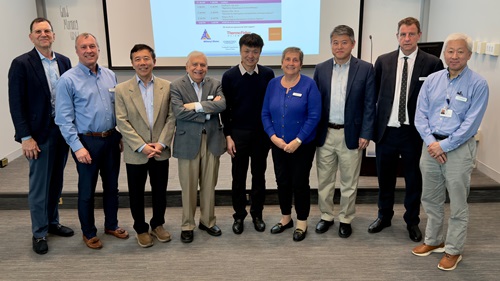
From T Cell exhaustion to vaccine interception, the Applied Immunological Research Symposium (AIRS) unites renowned scientists in advancing cancer immunotherapy.
The Hackensack Meridian Center for Discovery and Innovation (CDI) leveraged its continued platform as a nexus for research by hosting its third annual Applied Immunological Research Symposium (AIRS).
The symposium was held at the CDI’s state-of-the-art facility in a bid to bridge the gap between advanced immunological research and its practical application for patient care. The vehicle for this central message was the Center’s focus on innovation and translational science in cellular immunotherapy
The event brought together a world-class assembly of scientists to share groundbreaking findings aimed at accelerating the next generation of cancer immunotherapies.
According to David Perlin, Ph.D., chief scientific officer and executive vice president of the CDI, “this symposium is a direct reflection of our mission to create a dynamic, collaborative environment translating promising research into clinical practice.”
Flipping the Switch
Keynote speaker and world-renowned immunologist Rafi Ahmed, Ph.D., of Emory University, provided the event’s centerpiece with his keynote address, "What is T Cell Exhaustion?"
In a two-part presentation, Dr. Ahmed first explained the science of T cell exhaustion, where immune cells are "switched off" by inhibitory receptor PD-1—an immune checkpoint protein found on T Cells that acts as that “switch” to turn off immune responses—during chronic disease.
He then connected this science to patient care, presenting clinical data in oncology patients with the Human Papillomavirus (HPV-positive). His data showed how blocking this PD-1 switch reawakens a core population of "stem-like" T cells, unleashing them to fight disease as the body shifts its natural reaction to an acute infection becoming chronic.
“Big decisions have to be made early,” marveled Dr. Ahmed during his presentation. He’d continue that our immune systems are “always prepared for chronic, but adjust to acute, infection.”
After an amusing anecdote about collaborating with CDI scientist and colleague Hai-Hui “Howard” Xue, M.D., Ph.D., who provided his own animal models to help with the research process after a quick airport phone call, Dr. Ahmed concluded that these studies have further treatment implications in cancer treatment, a myriad of chronic infections, and various autoimmune diseases.
“Dr. Ahmed’s work has fundamentally reshaped our ability to treat diseases that were once considered intractable,” said Binfeng Lu, Ph.D., director of the CDI’s Institute for Immunologic Intervention (3i) and one of the symposium organizers. “His pioneering work on T cell exhaustion established a foundational conceptual framework for modern immunology and oncoimmunology, and is already saving lives by guiding the development of transformative therapies.”
The Common Threads: Weaving the Science Together
Dr. Ahmed’s address set the stage for a day of robust scientific exchange, featuring presentations from leaders at top research institutions nationwide.
Key studies and their talking points included:
- Yi Zhang, M.D., Ph.D., Center for Discovery and Innovation: Dr. Zhang—also one of the symposium organizers—presented novel strategies for the epigenetic reprogramming of T cells. He highlighted the importance of the EZH2 gene in CAR T cell therapy and in tumor control. His work offers a pathway to enhance cancer immunotherapy while simultaneously preventing graft-versus-host disease (GvHD) in transplant patients.
- Dean Lee, M.D., Ph.D., Nationwide Children's Hospital: Dr. Lee discussed the creation of a universal-donor manufacturing platform for NK and CAR-NK products, especially in pediatric cancers such as leukemia, where treatments such as bone marrow transplant is essential. This breakthrough is a crucial step toward making advanced, off-the-shelf cell therapies more accessible and affordable in multi-site clinical trials.
- Geoffrey R. Hill, M.D., Fred Hutchinson Cancer Center: Dr. Hill explored complex regulatory networks that govern patient responses to cancer immunotherapy, specializing in the EOMES gene (short for eomesodermin) in commanding T Cell and NK cell cancer response against acute graft-vs.-host disease. While imploring the need for more human studies, he provided key insights into overcoming therapeutic resistance, improving patient outcomes.
- Olivera J. Finn, Ph.D., University of Pittsburgh School of Medicine: Dr. Finn outlined her pioneering research in developing vaccines for human cancer interception, a triumph in the face of discouraging results over decades of vaccine studies for cancer-therapeutic use. Her work—in itself, an inspiring message of perseverance in the field—presented a shift from treatment to proactive prevention in the fight against cancer.
- Ming Li, Ph.D., Memorial Sloan Kettering Cancer Center: Dr. Li detailed the fundamental immunological mechanisms of cancer defense. His laboratory’s findings are uncovering new molecular targets to bolster the body’s natural ability to fight tumors. His presentation ended with the suggestion that we “go beyond checkpoint inhibitors” to continue meeting unmet needs in immunotherapy.
The event concluded with one cohesive message:
The future of cancer treatment lies in collaborative, translational research across public and private sectors.
“We’re passionate about providing a forum for the brightest minds in immunology,” said Dr. Perlin, also a professor of Medical Sciences at the Hackensack Meridian School of Medicine. “By convening such a powerful collection of scientific leaders, the CDI affirms its central role in the global effort to bridge the academic and clinical gap in fighting the world’s most challenging diseases.”