
Lee Investigates Glial Cell Metabolism to Transform Reconstructive Nerve Repair
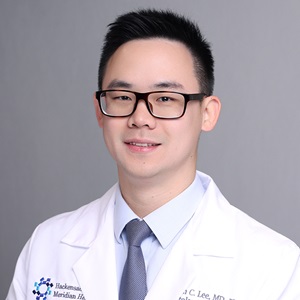 The human body possesses incredible healing ability. But when peripheral nerves are severed due to trauma or surgery, patients often face a race against time to get medical fixes to save function before it is lost forever. This is where the work of Jason Lee comes in - and aims to find new and better ways to save sensation.
“Peripheral nerve injuries still result in prolonged debilitation,” says Lee, M.D., Ph.D., a reconstructive surgeon and research faculty member at the Center for Discovery and Innovation (CDI), and assistant professor of Otolaryngology at the Hackensack Meridian School of Medicine, and facial plastic and reconstructive surgeon at Hackensack Meridian JFK University Medical Center. “But we’re getting better at what we can do, every day.”
Despite surgeons’ herculean efforts, the excruciatingly slow pace of natural nerve regrowth means that target muscles frequently atrophy before a neural connection can be restored. Lee has a plan to change the way things are done. From his operating room to the biology lab, he is pioneering a radical new approach: harnessing Schwann cells, specialized support cells leading the body's response to nerve trauma. By manipulating the neurotransmitter receptors of these glial cells, his lab aims to accelerate the nerve regeneration timeline so biological repairs outpace irreversible function loss.
“Jason Lee’s pursuit to push the boundaries of reconstructive possibilities brings exciting possibilities for untold patients of the future,” said David Perlin, Ph.D., the CDI’s chief scientific officer and executive vice president.
A Cross-Globe Journey to Neuroscience.
Lee’s path into reconstructive surgery and advanced-tissue research took some adaptation. His youth was spent in Taiwan until he came to the United States at 15, without any English language skills. He navigated high school with the help of English as a Second Language classes, quickly becoming fluent as he crammed science and other subjects. He eventually attended the Medical College of Georgia, where he graduated Summa Cum Laude while pursuing a combined M.D./Ph.D. degree with a focus on neuroscience.
During his graduate work he was already making contributions to foundational neuroscience research. His collaborative laboratory work identified a core mathematical principle governing neural ensemble organization. He also co-authored the Dopamine Rebound-Excitation Theory, essentially reframing the understanding of post-traumatic stress disorder (PTSD) as a consequence of dysregulated dopamine following suppression from acute stress. His academic work even included developing a machine-learning framework to classify neuron subtypes from huge samples of in-vivo data.
Initially, Lee planned to apply all this learning in pursuit of neurosurgery. But hands-on clinical work convinced him otherwise.
“It turned out that I did not like operating on the brain,” Lee recently recalled from his office. “I like to reconstruct things, so that's how I ended up going into reconstructive surgeries.”
Following his passion to fix and mend things, he completed his residency in Otolaryngology at the University of Kansas Medical Center and a fellowship in Facial Plastics and Microvascular Reconstructive Surgery at Oregon Health and Science University.
A Microvascular Reconstructive Reality
Now Lee applies his years of experience in the clinical setting at JFK. He manages a demanding and often unpredictable clinical schedule. These exhaustive surgeries, frequently lasting between five and 14 hours each, involve delicate, minute microvascular tissue reconstruction for patients suffering from traumatic injuries or undergoing tumor removals.
Clinical techniques mostly utilize a patient’s own tissue to rebuild missing anatomy. For example, a typical strategy is to collect a fibula bone from a patient's leg to rebuild a shattered or diseased jaw; blood vessels are reconnected in the neck to allow the newly transplanted tissue to live and heal; and delicate facial nerves are joined under high-powered microscopes, utilizing specialized sutures that measure just one-tenth of a millimeter in diameter. Additionally, Lee brings advanced alternative options: locoregional tissue rearrangement and prefabricated composite reconstruction, including novel tracheal repairs using 3D-printed polycaprolactone scaffolds and bioactive hydrogels. Often he employs nerve grafts from the neck or leg to bridge significant gaps where the native nerve has been destroyed. But even in perfect surgical conditions, nerves regenerate at a sluggish rate of approximately one millimeter per day. Over this lengthy period, target muscles deprived of a nerve signal inexorably atrophy, resulting in lifelong impairment.
All the tools are brought to bear to avoid that outcome. It’s as much an art as a science, using the surgeon’s experience and intuition as much as a by-the-numbers playbook.
“The only thing that all the peripheral nerve surgeons agree on is that you have to put the nerve back together at the time of injury,” Dr. Lee explained.
A Frontier.
Avoiding this clinical bottleneck is the Lee Lab's core mission at the CDI. Unwilling to accept the limitations of current surgical outcomes, he and colleagues are exploring new frontiers of what’s possible. While standard approaches focus directly on the axon or physical conduits, his laboratory is homing in on the workings of the neurotransmitter receptors on Schwann cells.
N-Methyl-D-Aspartate (NMDA) and Gamma-aminobutyric acid (GABA) receptors are, respectively, excitation and inhibition neurotransmitters. They have traditionally been studied for their signaling roles within the central nervous system. But Lee is exploring their specific function in the peripheral nervous system following traumatic injury.
“The NMDA receptor is one of the key receptors regulating the metabolic activities on Schwann cells,” he noted.
By genetically modifying Schwann cells derived from animal models to increase or decrease the expression of these receptors, his laboratory aims to actively control their metabolic activity.
Utilizing in-vitro 3D biomimetic environments alongside in-vivo preclinical models, his team is directly observing how these customized glial cells influence the speed of the axons’ regrowth.
The ultimate vision: to essentially give Schwann cells a kind of metabolic “steroid” to jumpstart biological repair.
Over the coming year, his lab aims to describe previously undocumented microenvironmental changes in NMDA and GABA receptors following peripheral injury, with consequent objectives to secure major grant funding and publish these foundational results. Lee recently set the stage for this work by publishing a comprehensive review in Plastic and Aesthetic Research on current and emerging therapies in peripheral nerve repair, spanning the gamut from nerve conduits and acellular allografts, to bioengineered scaffold systems.
Personal Life and Future Goals
Despite an immense workload that often requires him to crack the lab-research books on nights and weekends, family is paramount. The youngest of four siblings—and the only one in his family who doesn't faint at the sight of blood—he comes from a lineage of educators and engineers.
Outside the operating room, he prioritizes his time with his wife and their three young children. An outdoorsman, Lee is a passionate angler who formerly participated in competitive bass fishing tournaments in Georgia. When he is not waking up at 4 a.m. to cast a line, he enjoys building Lego sets with his kids.
As Lee continues to build his practice in New Jersey—drawing complex trauma and reconstructive cases from across the region— his ultimate ambitions remain grounded in patient care.
“I honestly just enjoy helping people, and that truly keeps me going every day,” he said. “If I can help advance the field while helping, that would just be the ultimate satisfaction for me.”